Container Homes in Dallas TX
Start your container home project with a quality used shipping container. Tiny homes, ADUs, guest houses, and more -- delivered across the DFW metroplex.
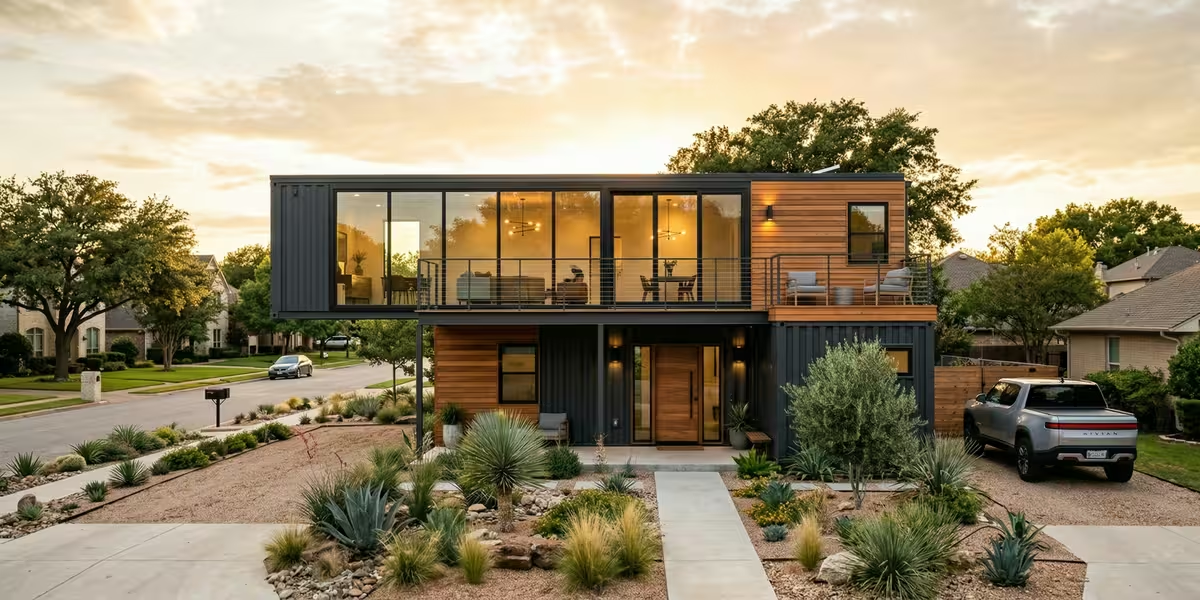
Container Homes in Dallas, Texas
Container homes have moved from architectural novelty to legitimate housing option in the Dallas-Fort Worth metro. The combination of rising construction costs, tight urban lot constraints, and a culture of adaptive reuse has driven a growing number of Dallas residents – from first-time homeowners to downsizing retirees – to explore shipping containers as the structural shell for permanent and semi-permanent dwellings. The appeal is straightforward: a 40ft high cube container delivers a rigid, pest-resistant, fire-resistant steel frame with 304 square feet of floor area at a fraction of the cost of conventional stick-frame construction. Stack two containers and you have a 600-plus-square-foot home. Arrange four in an L or T configuration and you are looking at a comfortable 1,200-square-foot residence with dramatic architectural lines.
Why Dallas Is a Strong Market for Container Homes
Affordable land in transitional neighborhoods. Neighborhoods like West Dallas, South Dallas, the Cedars, and areas along the DART light rail corridor contain vacant and underutilized lots that are priced well below the DFW median. Container homes allow owners to develop these parcels affordably, building a primary residence or an accessory dwelling unit (ADU) without the six-figure construction budget that conventional framing demands.
ADU-friendly policy momentum. The City of Dallas has been moving toward more permissive accessory dwelling unit regulations as part of its comprehensive housing strategy. Container-based ADUs – built from a single 40ft high cube or a pair of 20ft high cubes – fit the dimensional envelope for backyard structures in many residential zoning districts. Homeowners in established neighborhoods like Oak Lawn, Bishop Arts, and Kessler Park have used containers to add rental income or multigenerational living space to existing single-family lots.
Extreme weather resilience. North Texas experiences severe thunderstorms, hail events, and occasional tornadoes. A container home’s welded steel frame is inherently stronger than wood-frame construction in wind resistance. The corrugated wall panels deflect hail that would puncture vinyl siding or damage brick veneer. While no above-ground structure is tornado-proof, a container’s reinforced corner posts and continuous steel skin provide significantly better wind-load performance than a conventional 2x4 or 2x6 stick-built wall.
Heat management. Dallas summers are brutal. Container homes actually lend themselves to effective thermal management when properly insulated. Closed-cell spray foam applied to the interior walls and ceiling creates a continuous vapor barrier with R-values of 6 to 7 per inch. A 2-inch application achieves R-13 in the walls and R-14 in the roof, meeting or exceeding the IRC prescriptive requirements for Climate Zone 3 (which covers Dallas). The steel shell, once insulated, becomes a tight building envelope with minimal air infiltration – a significant advantage over stick-frame structures that rely on housewrap and caulk to manage air leakage.
Choosing Containers for a Dallas Home Build
Size selection. The 40ft high cube container is the foundation of most container home projects. Its 39-foot-5-inch interior length, 7-foot-8-inch interior width, and 8-foot-10-inch interior height give you enough room for a studio apartment, a one-bedroom layout with a compact kitchen and bath, or a long single-room living space. Combining two 40ft high cubes side by side (with a connecting opening cut between them) yields approximately 608 square feet of open floor plan – enough for a comfortable one-bedroom home with a full kitchen, bathroom, and living area.
For smaller builds, a single 20ft high cube (approximately 146 square feet of floor area) works as a backyard office, a guest casita, or a micro-unit ADU. Paired 20ft high cubes stacked vertically create a two-story structure with roughly 290 square feet and a dramatic vertical presence on narrow urban lots.
Condition selection. One-trip containers are the preferred choice for container home builds. The factory-fresh steel has not been exposed to years of ocean salt spray, the flooring is clean and structurally sound, and the paint provides a uniform starting surface for exterior finishes. Cargo worthy containers are a viable alternative for budget-conscious builders; they cost less and still provide full structural integrity, but expect to spend additional labor hours grinding rust spots and patching cosmetic defects before insulation and finish work can begin.
Wind and water tight containers can work for projects where the entire exterior will be clad – wrapped in metal siding, wood rainscreen, stucco, or another facade treatment – since the original container surface becomes invisible. As-is containers are generally not recommended for habitable structures unless the builder is an experienced fabricator who can weld replacement panels and repair floor sections.
Permitting Container Homes in Dallas
Building a container home in Dallas requires the same permits as any other residential construction project: a building permit from the City of Dallas Development Services Department (or the equivalent agency in surrounding cities), plan review against the International Residential Code (IRC) as adopted by the City, and inspections at each construction stage (foundation, framing/structural, mechanical, electrical, plumbing, insulation, final).
Key code considerations:
Foundation. Container homes in Dallas must sit on an engineered foundation. Pier-and-beam systems using helical piers or concrete piers are common because they adapt well to the expansive clay soils found throughout DFW. Slab-on-grade foundations also work but require careful moisture management given the region’s soil movement characteristics. A licensed structural engineer should design or review the foundation plan.
Structural modifications. Cutting openings in container walls for windows, doors, and pass-throughs removes structural material from the corrugated panels. Each opening must be reinforced with a welded steel header and jamb to maintain the container’s load-bearing capacity. The structural engineer’s drawings will specify header sizes and weld specifications for plan review.
Insulation and energy code. Dallas falls in IECC Climate Zone 3. Container homes must meet the same insulation, air sealing, and fenestration requirements as any other dwelling. Closed-cell spray foam is the dominant insulation method because it bonds directly to the steel surface, eliminates thermal bridging, and doubles as a vapor retarder. Walls require a minimum R-13 and the roof assembly requires R-30 (or R-19 if the roof is part of the container ceiling and a continuous insulation approach is used).
Fire safety. The steel container shell itself is noncombustible, which simplifies fire-resistance rating compliance. However, interior finishes (drywall, wood paneling, cabinetry) must meet the same flame-spread and smoke-development limits as in conventional construction. A single-layer application of 1/2-inch Type X gypsum board on interior walls and ceilings satisfies the finish requirement in most configurations.
Egress. Every sleeping room must have an emergency egress window meeting IRC minimum dimensions (5.7 square feet of clear opening, minimum 24-inch height, minimum 20-inch width, maximum 44-inch sill height). Container wall openings for egress windows must be cut and framed precisely to meet these dimensions.
Cost Breakdown for a Dallas Container Home
A complete container home build in Dallas involves several cost layers beyond the container purchase itself.
Container cost. A 40ft high cube one-trip container starts at $4,000. A cargo worthy unit starts at $2,450. For a two-container home, budget $4,900 to $8,000 for the shells.
Delivery. Local DFW delivery runs $150 for a flat fee within 25 miles.
Foundation. A pier-and-beam foundation for a two-container home typically costs $3,000 to $8,000 depending on soil conditions and engineering complexity.
Structural modifications. Cutting and framing window and door openings, welding reinforcement headers, and creating pass-throughs between containers runs $5,000 to $15,000 depending on the number and size of openings and whether the work is done by a mobile welder on site or in a fabrication shop.
Insulation. Closed-cell spray foam at 2 inches on walls and 3 inches on the ceiling for a two-container home typically costs $4,000 to $7,000.
Mechanical, electrical, and plumbing (MEP). Rough-in and finish for HVAC, electrical, and plumbing runs $8,000 to $20,000 depending on the complexity of the layout, the number of fixtures, and whether the home connects to municipal utilities or uses a septic system and well.
Interior finishes. Drywall, flooring, cabinetry, fixtures, and paint for a 600-square-foot container home range from $10,000 for a basic buildout to $30,000 or more for a high-end finish with custom cabinetry and premium materials.
Total range. A fully finished two-container home in Dallas typically falls between $35,000 and $90,000 all-in, depending on finish level and site conditions. That compares favorably to the $150-per-square-foot-and-up cost of conventional new construction in the DFW market.
Container Home Inspiration in the Dallas Area
The North Texas container home community has grown steadily over the past decade. Notable local examples include multi-container residential projects in the Oak Cliff neighborhood, artist live-work studios in the Cedars district, and weekend retreat builds on rural acreage in Henderson and Navarro counties. The Dallas Center for Architecture has hosted exhibitions featuring container-based designs, and several DFW-area architects now specialize in container residential projects.
Local builder meetups and online communities connect Dallas-area container home enthusiasts with fabricators, engineers, and code consultants who have direct experience navigating the City of Dallas permitting process. If you are considering a container home build, engaging with this local network early in the design phase can save months of permitting delays and thousands of dollars in avoidable design revisions.
Getting Started
Browse our container inventory to find the right size and condition for your home build. Use the price calculator on this page to get an instant quote including delivery to your build site. For multi-container orders, custom fabrication coordination, or questions about the Dallas permitting process, contact our team directly. We work with container home builders across the DFW metro every week and can connect you with local structural engineers, insulation contractors, and fabrication shops who specialize in residential container projects.
Best Containers for Home Builds
Cargo Worthy and One-Trip containers recommended for residential conversion projects
Popular Container Home Projects in Dallas
Tiny Homes
Convert a 40ft HC into a complete one-bedroom dwelling with kitchen, bath, and living area.
Accessory Dwelling Units
Add a backyard ADU for rental income or multigenerational living. Allowed in most DFW jurisdictions.
Vacation Rentals
Stand out on Airbnb with a unique container lodging. Industrial-modern design draws bookings.
Start Your Container Home Project Today
Tell us about your build plans and we will recommend the ideal container with a no-obligation quote.